.svg)

.png)
.avif)



Mini split AC installation offers a powerful solution for homeowners struggling with inadequate cooling in specific rooms, high energy bills from oversized central systems, or spaces where traditional ductwork simply isn't practical.
Quick Answer: What You Need to Know About Mini Split AC Installation
Mini splits solve a common problem: how to efficiently cool or heat specific areas without conditioning the entire home. Unlike central AC systems that can lose up to 30% of their energy in ductwork, mini splits deliver conditioned air directly where you need it.
By transferring heat instead of generating it, these systems are highly efficient, making them 2-4 times more efficient than traditional furnaces when heating. They also provide zoned temperature control, allowing you to set different temperatures for different rooms—ending thermostat battles and saving energy.
The installation involves mounting an indoor unit, placing an outdoor compressor, and connecting them through a small hole in the wall. While some steps seem simple, critical tasks like handling refrigerant and electrical wiring require professional expertise to ensure safety, efficiency, and warranty protection.

If you've ever wished you could cool just one room without running your entire AC system, you're going to love what mini splits can do.
Think of a mini split AC installation as a smart shortcut around traditional cooling systems. A mini split has two main parts: an indoor air handler that mounts on your wall and an outdoor condenser unit. They're connected by a small conduit running through your wall that carries refrigerant lines, electrical wiring, and a condensate drain line.
What makes mini splits especially clever is their heat pump technology. The same system that keeps you cool in summer can warm your space in winter, working efficiently in both directions.
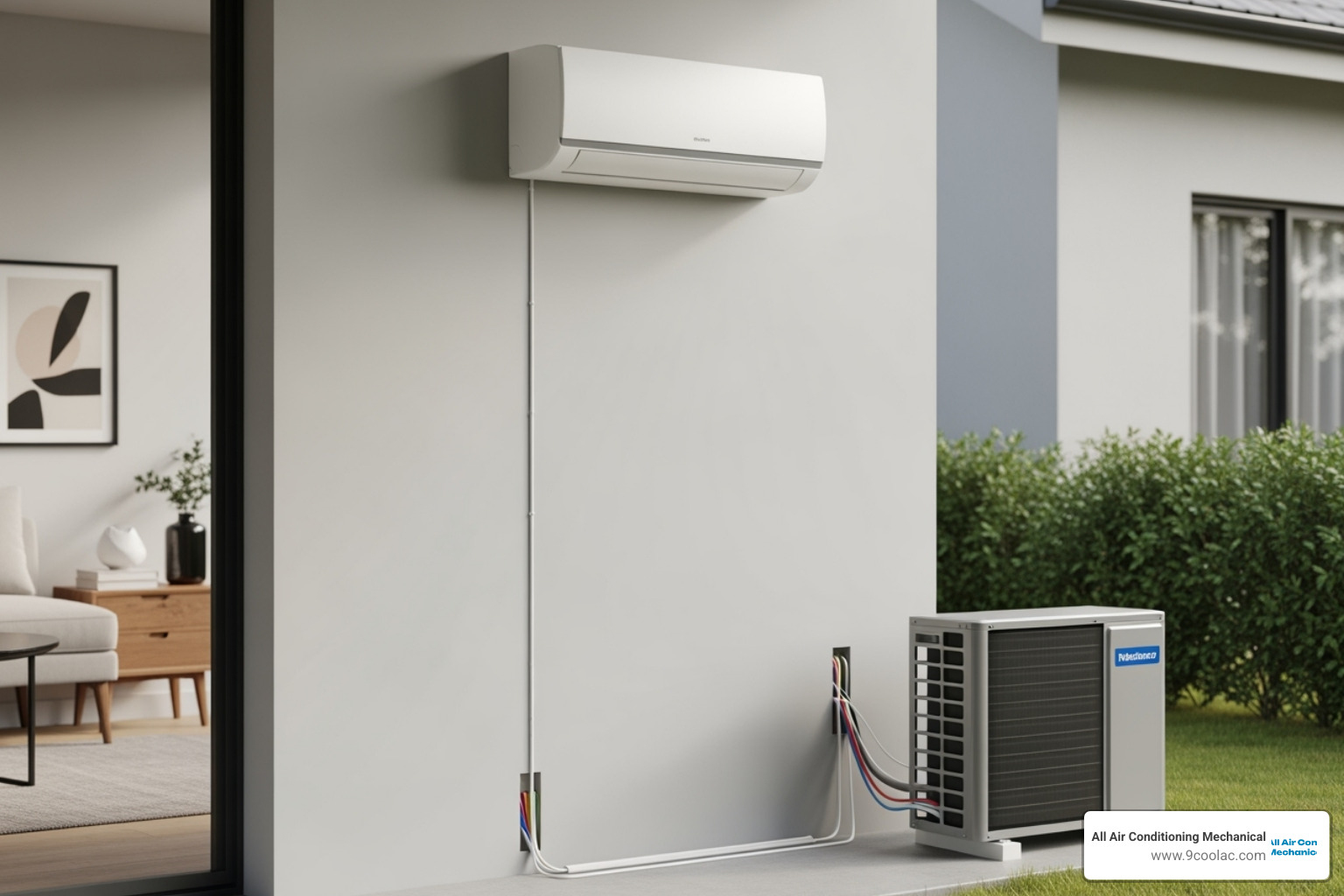
Mini splits take a completely different path from central air, offering several key advantages.
Ductless Design and Superior Efficiency: The most obvious difference is the ductless design. Traditional systems can lose up to 30% of their energy through leaky ductwork. Mini splits eliminate this waste by delivering air directly into the room. This, combined with heat pump technology, makes them 2-4 times more efficient than furnaces or boilers when heating, leading to significant savings on utility bills.
Zoned Temperature Control: With central AC, one thermostat controls the whole house. Mini splits allow each indoor unit to operate independently. Your home office can be a crisp 68 F while the living room stays at 72 F. You only pay to condition the rooms you're using, which further boosts efficiency and ends thermostat battles.
Quiet Operation and Flexible Installation: The loudest components live outside, so the indoor unit operates with a gentle hum, often quieter than a whisper. This flexibility also means mini splits can be installed almost anywhereconverted garages, new additions, or older homes without existing ductworkwithout major renovations.
Improved Indoor Air Quality: Traditional ducts can accumulate dust, allergens, and mold. By eliminating ducts, mini splits provide cleaner air. The sleek, wall-mounted units also free up window and floor space, blending seamlessly with your decor.
Proper preparation is key to a successful mini split AC installation. This means understanding your space and choosing the right equipment before you begin.
Not all mini split systems are created equal, and the right choice depends on your specific needs.
Single-zone vs. Multi-zone: A single-zone system—one indoor unit paired with one outdoor unit—is perfect for a single room, like a home office or garage. A multi-zone system connects several indoor units to one outdoor condenser, allowing independent temperature control in different areas of your home.
Sizing Your Unit (BTUs): Sizing is critical. An undersized unit will run constantly, while an oversized one will cycle inefficiently. A general rule is 35 BTUs per square foot, but this needs adjustment:
These adjustments are the difference between a system that works beautifully and one that leaves you frustrated.
Efficiency and Features: Look for high efficiency ratings: a SEER (Seasonal Energy Efficiency Ratio) of 16+ for cooling and an HSPF (Heating Seasonal Performance Factor) of 10+ for heating. Consider features like WiFi controls and low noise levels (under 35 dB for bedrooms).
While some homeowners can handle mounting brackets, a professional is needed for technical steps. Safety is non-negotiable.
Here's what you'll typically need for the installation process:
Now, about those safety considerations—this is where we need to have a serious conversation.
Electrical Work: Mini splits need a dedicated 240-volt circuit. This work is best left to a licensed electrician to prevent fire hazards and ensure code compliance.
Refrigerant Handling: Refrigerant is a pressurized chemical that requires EPA certification to handle legally. It can cause severe skin burns, and releasing it is illegal and harmful to the environment. This step is not for DIYers.
Wall Mounting: Ensure the wall can support the indoor unit's weight, securing the bracket to studs or using heavy-duty anchors.
A mini split AC installation involves three main phases: mounting the indoor unit, placing the outdoor unit, and connecting the system. While this guide explains the process, technical steps require a professional. Always refer to the manufacturer's instructions for your specific model.

The indoor unit is the part you see and feel. Proper placement is key for performance and aesthetics.
The outdoor condenser is the system's workhorse, exchanging heat with the outside air.
This phase brings the system to life and requires professional expertise.
Let's be honestwhile some parts of a mini split AC installation seem simple, there's a vast difference between making it work and making it work safely, efficiently, and for the long haul. Technical complexity, warranty requirements, and local building codes make professional installation essential.
Your warranty is often one of the biggest reasons to go professional. Most manufacturers explicitly state that their warranties are only valid when the system is installed by a licensed HVAC technician. An improperly installed system can fail in ways that look like manufacturing defects, and without professional installation documentation, you could be on your own for repairs.
When we talk about the importance of professional installation, we're really talking about three core areas where expertise makes all the difference.
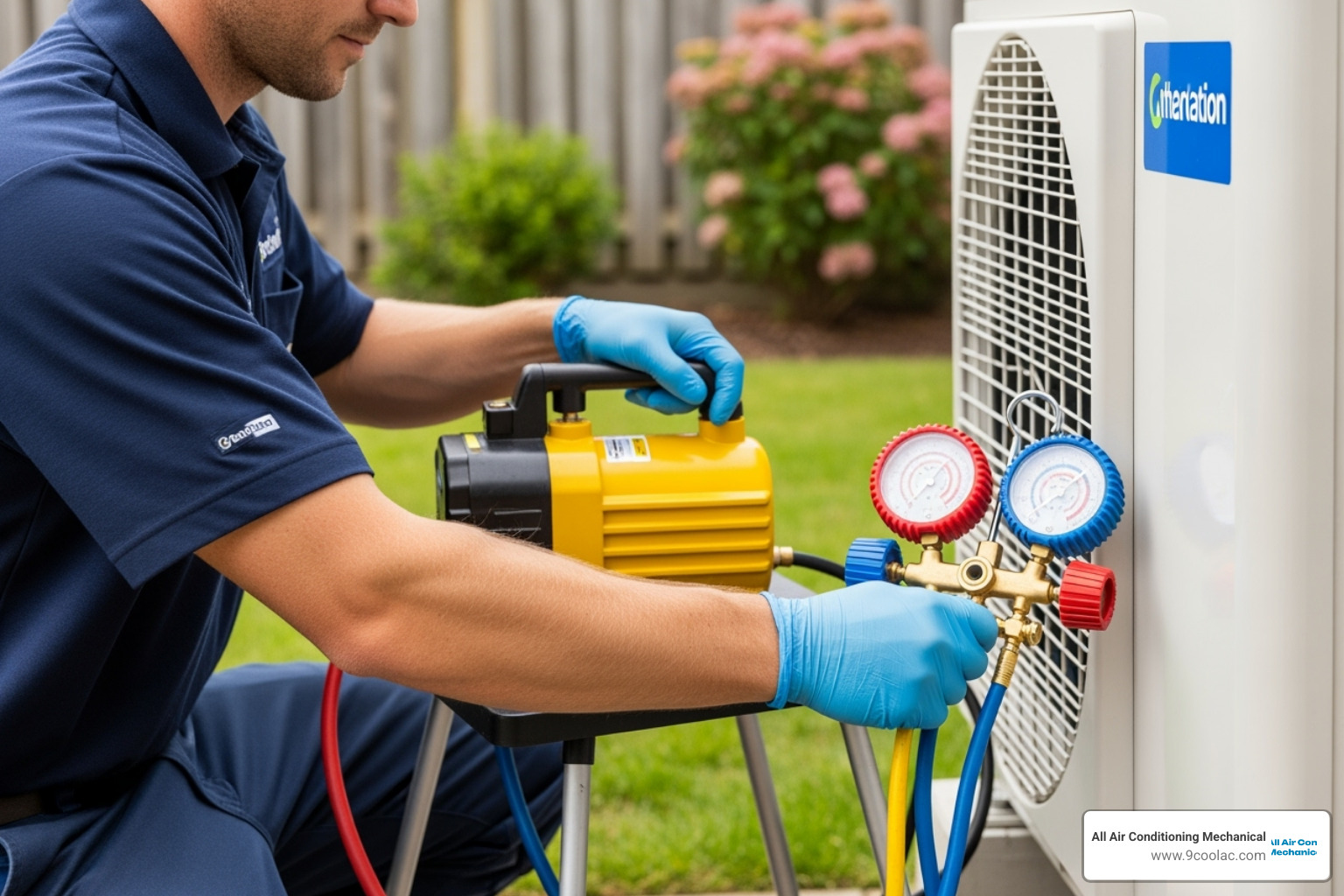
Electrical and Refrigerant Safety: Mini splits require a dedicated 240-volt circuit, and improper wiring is a serious fire hazard. Furthermore, handling refrigerant is legally restricted to EPA-certified technicians. It is a pressurized chemical that can cause severe burns, and releasing it is illegal. These are not DIY tasks.
Ensuring Peak Efficiency and Longevity: A professional ensures your system is correctly sized, all connections are properly torqued, and the refrigerant lines are perfectly evacuated. This attention to detail guarantees your system operates at its advertised efficiency rating, meeting standards like those set by ENERGY STAR, and avoids costly mistakes like compressor damage from a slow leak. Most manufacturer warranties are void without proof of professional installation.
Local Expertise: When you work with local HVAC professionals like us at All Air Conditioning Mechanical, you're partnering with a team that understands our climate, handles all permits and code compliance, and provides ongoing support.
Once your mini split AC installation is complete, a little regular care will keep it that way.
We've covered a lot of ground together in this guide, from understanding what makes mini split AC installation such a game-changer to walking through the actual installation process itself. These ductless systems truly are revolutionizing how we think about home comfort—offering energy savings that can be 2-4 times better than traditional systems, precise zoned control so everyone gets their perfect temperature, and the flexibility to cool or heat spaces where conventional ductwork just won't work.
Whether you're dealing with a sweltering garage workshop, a home addition that never quite feels comfortable, or simply want to stop paying to cool rooms nobody's using, mini splits offer an neat solution. The beauty of these systems lies in their simplicity and efficiency: no ductwork means no energy losses, and individualized control means no more thermostat battles or wasted energy.
Throughout this guide, we've emphasized one crucial point: while understanding the installation process is valuable, the technical complexity of mini split AC installation—especially the electrical wiring and refrigerant handling—makes professional installation not just recommended, but essential. Your system's warranty, your family's safety, and years of reliable performance all depend on getting those critical steps right the first time.
At All Air Conditioning Mechanical, we've helped countless Pembroke Pines homeowners transform their comfort with expertly installed mini split systems. We understand the unique climate challenges of our area, and we're committed to ensuring your system is sized correctly, installed safely, and running at peak efficiency from day one. Our team handles everything from permits and code compliance to that crucial refrigerant evacuation process, so you can simply enjoy the comfort.
Ready to experience the energy-efficient, personalized comfort that mini splits provide? Get professional AC installation in Pembroke Pines and let us help you find the perfect solution for your home's unique needs.